Showing posts with label Tummy tuck in Delhi. Show all posts

Saturday, 7 May 2022

Plastic surgery for those who do not wish to have children in the long term


Consideration before plastic surgery should consider several factors including motivation, financial situation, and even if the patient intends to have children soon suggests the plastic surgeon in Delhi. Surgeries are not contraindicated for those planning a pregnancy, but there are procedures that may have their results compromised by pregnancy.

In this way, knowing the options for plastic surgery for those who do not intend to have children guarantees the right choice for patients.

Plastic surgery options for those who do not intend to have children

With medical advice, any plastic surgery is possible, regardless of the patient’s maternity wishes. However, as the plastic surgeon in Rohini says, some plastic surgeries can have their results compromised by a pregnancy, being more suitable for those who no longer intend to have children.

If you are looking forward to procedures like rhinoplastyfacelift, mentoplasty, and others, pregnancy does not influence the results in these cases. The options indicated for those who do not wish to become pregnant are those with the most significant body changes. Check it out below.

Mammoplasty

Many women have a mammoplasty before becoming pregnant and there is no problem, as long as the surgery takes place about 12 months before conception and there is time for complete healing of the region.

However, breastfeeding can influence the aesthetics of the breasts in patients who have previously had a breast implant, resulting in a more flaccid appearance if there is a high production of milk and, consequently, an increase in the mammary glands.

Breast reduction surgery in Delhi for women who do not intend to have children has a considerably lower risk of sagging. Patients interested in reduction mammoplasty should also seek guidance from the plastic surgeon in Pitampura so that the procedure does not interfere with future breastfeeding.

Liposuction

A more complex plastic surgery is liposuction, which aims to remove localized fat deposits. Although it can be performed in different regions, it is most common on the abdomen, flanks, and back.

In the long term, the results of liposuction directly depend on the maintenance of the patient’s weight and, since pregnancy influences weight gain, it can compromise the results.

Thus, patients who do not plan to become pregnant are better candidates for liposuction in Delhi considering the long-term maintenance of the results of the surgery. Despite this, other factors can influence weight gain other than pregnancy, such as hormonal disorders, diet, and sedentary lifestyle.

Just like traditional liposuction, varied techniques such as liposculpture and HD lipo also face the same limitations.

Tummy tuck

One of the recommendations of abdominoplasty is for women who have abdominal flaccidity or diastasis of the rectus abdominis muscles, even if they have never had a pregnancy.

Thus, although this does not make a future pregnancy unfeasible, the results of plastic surgery can be lost, especially if there is a significant weight gain.

The focus of tummy tuck in Delhi is the removal of excess skin that can be caused by pregnancies, considerable weight loss, or people with a tendency to sagging in the abdominal region.

Therefore, although plastic surgeries do not harm the pregnancy if you change your mind, some of them are more recommended for those who do not intend to have children due to the long-term results.

Monday, 25 April 2022

Abdominoplasty step by step


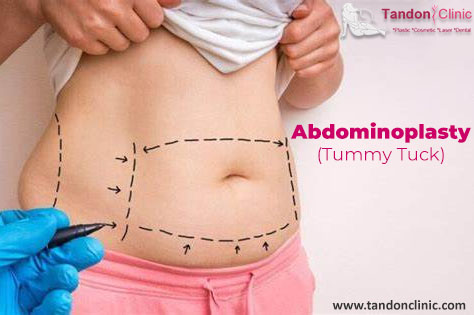
Abdominoplasty is one of the most common procedures of Plastic Surgery in Delhi to correct the waistline. Abdominoplasty is an abdominal plastic surgery to remove excess skin in the region. It can be performed on men and women who want to correct different conditions, such as:

  • sagging: people with excess flaccidity in the abdomen and who cannot eliminate it with methods such as diets, physical exercises or other aesthetic procedures;
  • stretch marks: excess stretch marks in the abdomen region can also be eliminated with the procedure if it is associated with sagging;
  • Diastasis: consists of the separation between the rectus abdominis muscles 
  • Muscle weakness: Patients with muscle weakness in the abdominal region may also undergo surgery to promote stabilization of the abdominal wall.

Although not the only cases, these situations are common in post-pregnancy, patients who underwent bariatric surgery or who lost a lot of weight in a short time.

Genetic factors are also related to a greater predisposition to skin accumulation and sagging in the abdominal region, explains the Cosmetic Surgeon in Delhi.

Abdominoplasty Steps

Abdominoplasty in Delhi is performed with epidural or spinal anesthesia with intravenous sedation for the patient to sleep, or with general anesthesia when associated with other surgeries, such as liposuction. Therefore, this surgery is always performed in the hospital.

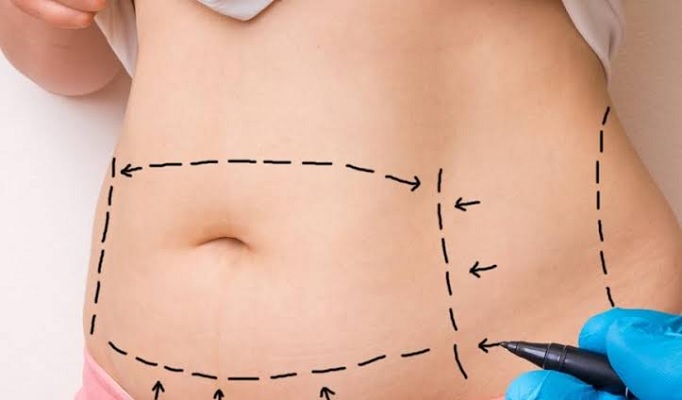
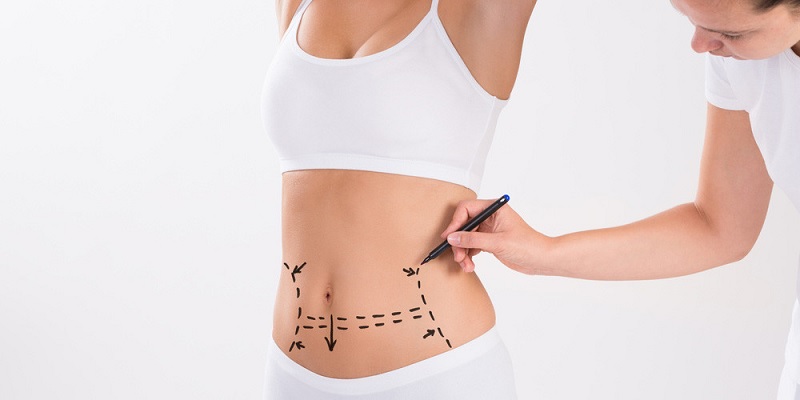
After asepsis of the skin, the surgeon makes the incision lines: in general, the first is made in the pubis, from one hip to the other, and the second from the first in a vertical direction, passing around the navel. Then the tissue is lifted to expose the abdominal muscles, explains the Plastic Surgeon in Delhi.

In this way, the surgeon can sew the muscles that are strained. Afterwards, the skin that was lifted to expose the muscles is repositioned, passing over the navel, which will be hidden (as it is attached to the internal abdominal wall).

To expose the belly button again, the surgeon makes a hole in the tissue around it. Then, the excess skin and fat are removed from the original incision, in order to solve the problem of sagging.

The next step is to insert the drains to prevent fluid build-up and suture the incisions. Finally, dressings are made and the patient is dressed in the compression garment. The surgery takes 2 to 3 hours, explains the Plastic Surgeon in Pitampura.

Types of Abdominoplasty

Above, we have described the classic tummy tuck step-by-step, but there are other variations of this procedure. Learn more about them:

  • Classic abdominoplasty : this is the most traditional method, which aims to remove excess skin and correct muscle sagging. It is recommended for patients with large excess skin and significant spread of abdominal muscles;
  • Extensive abdominoplasty : in addition to removing excess skin and correcting abdominal sagging, this surgery also removes excess located on the sides, hips and lumbar, so the incision is larger. It is a highly sought-after surgery after pregnancy;
  • Miniabdominoplasty : is a minor surgery compared to the classic method, indicated for patients who want or need to eliminate only excess fat skin below the navel, in the region called “belly foot”. Your recovery is faster;
  • Lipoabdominoplasty : associates abdominoplasty with liposuction, indicated for patients who have a thicker layer of fat in the abdomen. It removes excess fat from the belly, waist and back, reshaping the outline.

Care before surgery

Ten days before the Abdominoplasty in Delhi, it is necessary to stop the use of drugs to lose weight and other substances as recommended by the Plastic Surgeon in Delhi. The day before, you should avoid consuming alcoholic beverages and heavy meals.

On the day of surgery, the patient must attend the hospital for admission at the previously agreed time to fast for 8 hours, including water. In case of flu or other ailments, the patient must notify the team up to 2 days before surgery.

A very important detail before having a tummy tuck in Delhi is to have everything properly organized so that you can take a two-week home rest after the procedure, allowing your recovery, says the Plastic Surgeon in Pitampura.

Abdominoplasty recovery

The patient may experience pain and discomfort for the first three days, which are usually relieved with simple painkillers prescribed by the doctor. It will not be possible to get fully erect right away, but it is recommended to take short walks.

The dressings must be removed within 24 hours, and the patient can take a full bath. Drains are usually removed in two to three weeks. The diet can be normal, just avoiding foods that favor the accumulation of gases.

It is essential that the patient uses the compression belt for at least 30 days. It helps keep tissues in their new locations and facilitates healing, as well as providing patient safety.

The patient should avoid straining and lifting weights for 30 days, gradually resuming physical activities as authorized by the Plastic Surgeon in Delhi. Lymphatic drainage sessions are recommended from the fourth day onwards.

Abdominoplasty risks

As with any surgery, there are risks of infection, hemorrhage, necrosis and thromboembolism. But if the patient takes proper care, recovery will occur in a healthy and positive way, explains the Plastic Surgeon in Shalimar Bagh.

Tummy tuck scars

The scar is located horizontally, just above the pubic hairline, and is normally covered by underwear and bathing suits. The size of the scar depends on the volume to be corrected in the Tummy tuck in Delhi.

In the first 30 days, the scar will be quite discreet, perhaps with some reactions to the stitches and dressings. From the second month onwards, there is a natural thickening and a change in color, in which the scar changes from red to brown, becoming darker.

Between 12 to 18 months after surgery, the scar gradually starts to get lighter and less consistent, reaching its final appearance only after that period, says the Plastic Surgeon in Shalimar Bagh.

Tummy tuck and liposuction: what are the differences

While abdominoplasty in Delhi aims to correct sagging and reposition muscles, liposuction promotes the removal of localized fat. Liposuction in Delhi is performed by inserting cannulas that suck out excess adipose tissue.

These two procedures can be combined to promote an even more complete surgery, providing better results to patients when needed.

Wednesday, 6 April 2022

Mommy makeover: Recover your figure after pregnancy

Much is being heard lately about the "mommy makeover", a trend that translated into our language comes to mean the "renewal, new look or remodeling of the mother".

We are really talking about postpartum cosmetic surgery.

What physical changes occur during pregnancy?

And it is that everyone knows that motherhood entails physical and bodily changes that are sometimes undesirable:

·        the skin of the abdomen stretches and becomes saggy,

·        fat accumulates in the waist, cartridge belts, etc.,

·        the breasts lose their firmness, fall and lose their fullness, appearing empty, without turgidity...

The breasts during pregnancy and lactation undergo a series of changes aimed at the production of milk and are generally a remarkable development of the mammary gland, with an overall increase in size. Later that same gland atrophies by not having to perform that secretory function. As a consequence, there is a loss of volume in general, loss of firmness and "ptosis" or sagging of the breasts.

The abdomen, for its part, stretches to accommodate the baby, in such a way that its skin firmness is lost.

The abdominal muscles also undergo changes, just as the skin stretches, so do the abdominal muscles. A typical alteration of pregnancy is that the rectus abdominis muscles (those responsible for the so-called six-pack or chocolate bar) separate from the midline, maintaining this separation after delivery, which is called "diastasis recti", and which causes an abdominal protrusion, a kind of tummy in the central area of ​​the abdomen, which occurs even in thin patients with good muscle tone.

These physical changes are sometimes difficult to fit into the framework of the demanding society in which we live today, where physical appearance, health, being "fit" or in good physical shape, have become some of the most important concerns. relevant to the population.

All these factors together mean that many moms, after having fulfilled their dream of being mothers, do not want to give up their previous physical appearance.

What is the Mommy Makeover?

The "mommy makeover" consists of a set of plastic and aesthetic surgery procedures, whose purpose is to return the mother to her previous appearance or alleviate the secondary body changes to the pregnancy process.

In the first place, a medical evaluation of the patient must be made, since in each one of them the needs will be different and the treatment must be individualized.


What are the surgeries used to improve the figure after childbirth?

The procedures that are usually included in the "mommy makeover" are abdominoplasty, repair of diastasis of the abdominal muscles, mammoplasty, and sometimes liposuction of certain lipid accumulations.

·        Abdominoplasty: The purpose of tummy tuck in Delhi is to restore firmness to the abdomen, eliminating excess skin and adipose tissue, as well as repairing the "diastasis" or separation of the rectus and restoring structure and function to these muscles.

·        The mammoplasty technique differs according to the characteristics of the patient: sometimes, breast augmentation in Delhi is needed, which have become atrophic after pregnancy, usually with prostheses; other patients will require a breast reduction in Delhi to reshape and reduce the size of their breast, and finally, one of the most demanded breast surgeries after pregnancy: mastopexy or "breast lift surgery in Delhi", in which the breast is reshaped, getting it back its shape and position by lifting and reshaping it. This last technique is frequently carried out with the help of breast prostheses.

·        Finally, liposuction or liposculpture surgery varies depending on each patient and the possible accumulations of fat that may have developed during pregnancy and/or lactation. Liposuction in Delhi is a simple and optimal technique to treat accumulations of fat in a specific way. mentioned fat.

When is it advisable to undergo these procedures?

Despite the fact that news can be found in the press in which it is commented that there are certain procedures such as abdominoplasty that are performed in the same act of childbirth, specifically if it is a cesarean delivery, for best plastic surgeon in Delhi this is reckless for several reasons:

·        Increases the risk of postpartum complications.

·        The surgeries that make up the "mommy makeover" require rest and a series of strict care afterwards, and postpartum is probably not the best time to follow these recommendations, due to the new situation of the mother, who will have to direct her care and attention to the newborn.

·        In the postpartum there is a regression of the anatomical and physiological changes produced in pregnancy, with a progressive recovery of the tissues, for this reason the most reasonable thing is to wait a while for all the tissues to return to normality, on multiple occasions it will not be necessary to intervene in the patient.

Plastic surgeon in Delhi recommends undergoing these surgeries once the period of conception of the children is over, and at least 1 year after the last pregnancy, to perform the surgery in physical conditions of stability, both physical and psychological.

If you want information about this procedure, do not hesitate to contact plastic surgeon in Rohini.

Monday, 20 December 2021

Frequently asked questions about abdominoplasty

Throughout this post we will try to solve the most frequent questions about abdominoplasty in Delhi that are usually asked in the consultation.

All these issues and others that we have should always be discussed before this plastic surgery.

How long does the surgery take?

Approximately two to three hours.

It should be remembered that between the departure to the OT and the return should not be taken as the duration of the surgery.

Therefore, what is the surgical procedure is this that we indicate. It can take longer if combined with other procedures.

Can you use an epidural?

Abdominoplasty is usually done with general anesthesia, although in moderate cases it could be done if circumstances allow it with local anesthesia and sedation.

Being a long procedure, plastic surgeon in Delhi recommend general anesthesia for both our comfort and that of the patient.

Are tummy tucks and liposuction the same?

The tummy tuck in Delhi is intended to correct a loose abdomen. This is the main objective, so a specific technique is used for it.

Sometimes it happens that in addition to flaccidity there is excess fat. And that is when you have to resort to liposuction.

This is only used to eliminate excess fat, and is not only practiced on the gut. It is also used in other parts of the body such as double chin, arms or cartridge belts.

Abdominoplasty in Delhi is the intervention that is performed when there is excess skin and fat in the abdomen. A liposuction would aggravate the loss of redundant skin over the pubis. The skin tone, the amount of fat and the quality of the skin will make us recommend one or another intervention.

How is excess skin removed? Will the scar be visible?

There are different techniques and this influences the scar. The most common is a horizontal line that passes over the pubic hair, and extends from one hip to the other. This shape has been widely used with the use of the bikini, but currently we use a W-shape, which is better adapted to the current fashion of underwear and swimsuits, and leaves a better scar.

When the excess of tissues is great, the removal of the skin of the lower abdomen is total, in this case a reimplantation of the navel is carried out.

In cases where the defect is not very marked, a lesser technique can be performed, called miniabdominoplasty, with less skin resection and generally combined with liposuction in Delhi. The application of one or the other depends on the characteristics of each particular case.

If you have scars on the abdomen, can you have surgery?

If you have scars from previous operations and they are in the lower half of the belly there is no problem, in fact they can be removed during the operation. However, if they are located in the upper half then abdominoplasty is contraindicated.


What risks does it have?

When it comes to surgery, the risks exist. Bleeding, infection, and poor healing are some of the negative effects that can occur.

Occasionally, seromas appear or a small piece of skin is lost at the incision line. Very rarely, patients experience abdominal pain that lasts longer than the usual period. In other rare cases, blood clots form in the patient's legs.

Remember that this information is intended to help you make an informed decision.

Before surgery, plastic surgeon will indicate the complete series of risks. Although tummy tuck is considered a very safe procedure, all decisions regarding this surgery must be made carefully.

If you want to get pregnant again, can you have a tummy tuck?

It is advisable that if you plan to have new pregnancies, you do so before surgery.

Anyway, once operated, you can have more children although the result of the intervention may be altered.

What requirements must the patient meet?

Most people who have become obese and then lost weight often have a residue of skin and fat left on the abdomen.

Fortunately, this condition can be corrected with a tummy tuck, which is a procedure that removes not only excess skin from the abdomen. But also that of the flanks, on the sides of the waist, and excess skin in the lower part of the abdomen.

Abdominoplasty is often recommended by plastic surgeon in Rohini after pregnancy, too. And in those people who for various reasons have a flaccid area and want to improve it.

What effect does tobacco have on the result?

Due to the great extension of the detachment and the dimensions of the area that is normally practiced in this type of intervention. It is important that smoking patients stop smoking at least three weeks before the operation.

The reason for this is that tobacco causes an alteration of the microcirculation that can seriously compromise the final result.

Will I be able to do sit-ups again?

One month after the surgery, you will be able to recover normal physical activity. The incorporation of abdominals should be gradual, like that of any other exercise.

Do lax or open abdominal muscles have a solution?

One of the muscular bands of the body is the so-called “rectus abdominis”. Which is the area that allows us to carry out movements such as the so-called “abdominals”.

Made up of two parts, these muscles are attached from the sternal bone and ribs to the pubic bone, forming an internal system that firmly supports the abdomen.

During pregnancy, these muscles separate to allow the baby to grow. After birth, these muscles often remain separated. Making it impossible to firm the lower abdomen with exercise, diet, or other non-surgical means.

With abdominoplasty, this condition, called diastasis recti abdominis, is treated by bringing the muscles back together and restoring their strength and tone.

Is the scar from the abdominoplasty or dermolipectomy large?

The scar from a tummy tuck depends on the patient, the problem to be treated, the technique used and the quality of the skin.

The scar that remains will always be hidden by the clothing or swimsuit chosen.

Will I have a lot of pain?

During the first days, the abdomen is swollen and you will have some discomfort that is controlled with medication and rest.

You will also have a limitation of mobility, which will be prolonged in time. According to the magnitude of the muscular reinforcement and to each patient in particular.

Does a tummy tuck remove stretch marks?

Stretch marks represent a big problem for many patients.

Depending on the distribution of the marks across the abdominal skin, most if not all of them can be removed during a tummy tuck.

This is because the skin of the lower abdomen (the exact place where stretch marks tend to concentrate) is removed during the procedure.

Sunday, 2 February 2020

7 Main Questions about Tummy Tuck

Tummy-Tuck

A tummy tuck in Delhi is a procedure that aims to remove excess fat and skin from the abdomen, providing an aspect more tuned and toned. It is the third most performed cosmetic surgery in Delhi.

Despite this demand, many people have doubts about how abdominoplasty in Delhi is performed, what the indications are, among other issues. To minimize such questions, plastic surgeon in Delhi answered the 7 most recurring questions when it comes to abdominoplasty. Check out!

1. How does abdominoplasty surgery work?

The first step in an abdominal dermolipectomy, also known as abdominoplasty, is the patient's anesthesia. Then, the cosmetic surgeon in Delhi makes a horizontal incision below the navel close to the pelvic area and makes a tunnel under the skin that goes up to the level of the stomach.

The next step is to detach the skin from the abdominal muscle and suture the musculature, preventing it from loosening in the future. Because of this, abdominoplasty is also used to restore muscles that are weakened or separated.

Finally, the plastic surgeon in Delhi removes the remaining skin and holds the patient's navel, since it is necessary to release it to perform this type of plastic surgery on the belly, and closes the skin incisions.

2. When is abdomen plastic surgery indicated?

It is important to note that abdominoplasty in Delhi is not indicated for weight loss. Only dietary reeducation and physical exercise, both performed with the appropriate professional support, are capable of providing weight loss.

Therefore, in order to undergo plastic surgery on the belly, the patient must be in favorable physical conditions, as well as having the ideal weight based on the BMI. In addition, plastic surgery in Delhi for the abdomen is advised in the following cases:
  • Aging: due to the increase in sagging in the abdominal region that appears over time;
  • Pregnancy: when there is excess tissue and flaccidity after a pregnancy;
  • Weight variation: due to sudden weight loss or gain, generating the famous “concertina effect”;
  • Previous surgery on the abdomen: abdominoplasty is used as a restorative surgery when other procedures leave the region more flaccid, such as bariatric surgery;
  • Genetic inheritance: when the person acquires flaccidity due to the genetic influence of family members.

3. What is the difference between liposuction and abdominoplasty?

Both are surgeries performed on the belly, however, the difference is in the objective of each one. While abdominoplasty removes excess skin, providing an effect on the outer part of the skin, liposuction eliminates the fat located below the skin, generating an internal effect.

In most cases, these procedures are combined to offer an even more noticeable result and consistent with the patient's expectations.

4. How much does an abdominoplasty cost?

Although the price of abdominoplasty is a popular topic on the internet, it can only be clarified in the office through a specific assessment of each case.

However, it is possible to show the aspects that are covered when determining the value of plastic surgery on the belly. Are they:
  • Consultation before the procedure;
  • Diagnostic tests (in this case, you can use the health insurance);
  • Fees of the surgeon and the team that will participate in the surgery (based on experience, location of the office, etc.);
  • Hospital expenses for hospitalization and use of the operating room;
  • Costs with the trip to and from the hospital;
  • Expenses with medications and compression mesh after plastic surgery on the belly;
  • Conducting lymphatic drainage to reduce swelling.

5. What are the cares after abdominoplasty?

As it is a highly complex surgery, the patient must take some care after tummy tuck in Delhi to improve recovery and avoid complications. Check out some recommendations during this period:
  • Start light leg movement as soon as possible;
  • Keep in a moderately curved position during the first fortnight;
  • Take care of the dressings as instructed by the plastic surgeon in Delhi;
  • Adopt a light and balanced diet;
  • Avoid physical effort;
  • Bathing with the help of a close person to wash the rest of the body and avoid the abdomen;
  • Sleeping on your back and with legs elevated and slightly bent;
  • Getting out of bed without using the abdomen;
  • Take only the medicines prescribed by the doctor;
  • Walk at home with the help of a person to help with blood circulation;
  • Use the compression mesh over approximately 35 days;
  • Do not immerse baths in swimming pools or bathtubs until medical clearance.

6. How long does it take to recover from an abdominoplasty?

On average, it takes 12 months to recover from plastic surgery on the abdomen. However, this process happens gradually, and until the 6th month there will be a certain degree of swelling that will decrease with time.

7. How long can I work out again after abdominoplasty?

It is suggested that the patient wait 30 days after the abdominoplasty to resume physical activities, performing only exercises with less impact. After 90 days, if the surgeon authorizes it, the patient can return to weight training and abdominal exercises.

Before performing an abdominoplasty in Delhi, it is crucial that the patient is aware that the procedure is the most suitable for what he wants.

Saturday, 25 January 2020

Abdominoplasty Surgery

Abdominoplasty

The abdominoplasty surgery or popularly known as tummy tuck in Delhi is the skin and fat removal procedure from the abdomen. There are many factors that contribute to the change in the shape of the abdomen among them:
  • Genetics
  • Large variations in weight
  • Pregnancy in the case of women
The abdominal wall formed by muscles, fascias, fatty tissue and skin end up "relaxing" and take on a disharmonious shape in relation to the rest of the body.

The plastic surgery called classic abdominoplasty or dermolipectomy, is one of the most performed in plastic surgery in Delhi, it consists of correcting the flaccidity of the entire abdominal wall through the plication (embryos with stitches) of the musculature and removal of a skin spindle and fatty tissue in the region. lower abdomen, explains the plastic surgeon in Delhi.

The resulting scar is a horizontal line below the waistline and around the navel. The aim is to “take advantage” of the scar from the previous cesarean if present. In some cases, a small vertical scar on the midline associated with the horizontal one is necessary.

Classic abdominoplasty in Delhi is performed in the operating room under general or epidural anesthesia and lasts around 2 to 3 hours. Hospital discharge is the day after surgery.

Variations of classic abdominoplasty:
  • Lipo abdominoplasty
Lipo Abdominoplasty or popularly know as liposuction in Delhi is a technique in which liposuction of the entire abdomen is performed before muscle plication and skin spindle removal. The resulting scars are similar to those of classic abdominoplasty;
  • Mini abdominoplasty
Mini abdominoplasty is a technique that corrects the flaccidity of abdominal muscles just below the navel and in which a smaller skin spindle is removed than in classic abdominoplasty. The resulting scar is a horizontal line below the waistline.

Frequently asked questions about abdominoplasty surgery:

How much weight will I lose with the surgery?
It depends on the amount of skin and fat removed (skin spindle or liposuction). The biggest change is visual, that is, the body contour and not the scale.

How long will I see the result?
The contour change is immediate, but the final result can only be seen after at least 3 months. The main reason for this period is that the lymphatic drainage is compromised by surgical manipulation and, thus, there is an accumulation of fluid that changes the shape of the abdomen. The lower region of the abdomen, that is, close to the scar is the one that remains swollen the longest. Lymphatic drainage performed by an experienced cosmetic surgeon in Delhi can shorten the recovery period.

Will I lose the result if I get pregnant?
As long as the patient becomes pregnant within a minimum of 2 years after surgery, the result can be kept very close to that obtained if some precautions are taken during pregnancy, such as not gaining excess weight (> 13 kg) and maintaining some regular physical activity (water aerobics, walking), suggests the plastic surgeon in Delhi.

Do I have to keep a drain?
With some exceptions, we use the drain in Classic Abdominoplasties and Lipo-abdominoplasties due to the accumulation of fluid under the skin and subcutaneous tissue. The drain remains for 7 to 10 days depending on the amount of liquid drained. Patients have no pain on withdrawal.